

International Women’s Day (2022)
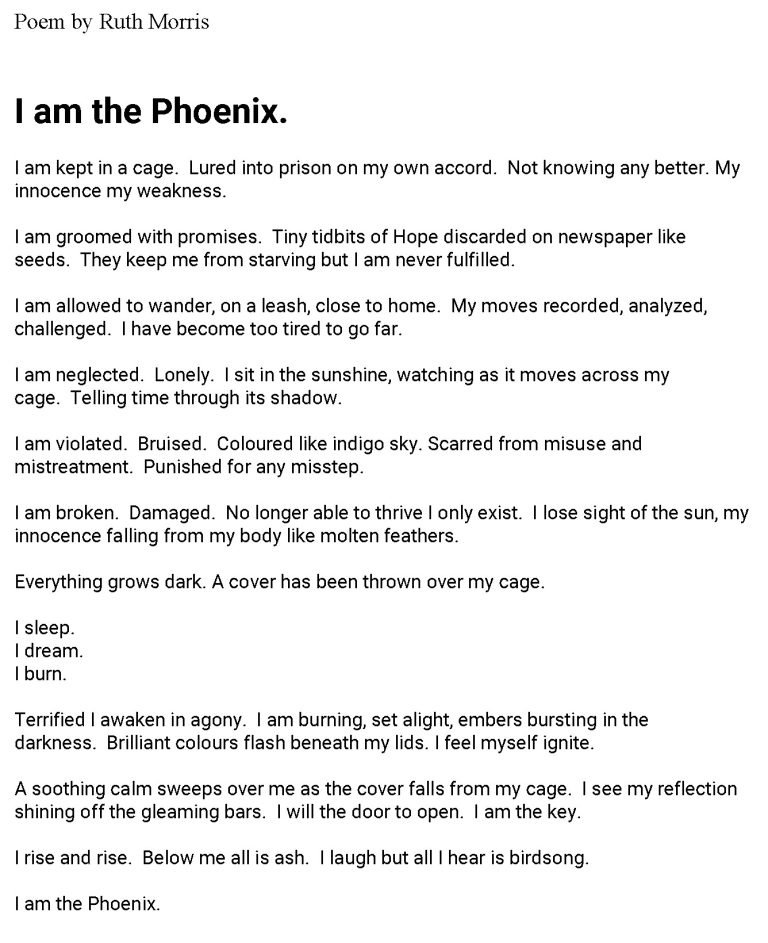
In commemoration of International Women’s Day, the Manitoba Association of Women’s Shelters launched an Art Contest. The winner was Ruth Morris, author of the poem “I am the Phoenix”. Read Ruth’s powerful poem about courage and resilience in our gallery below.
These individuals, artists, and poets featured below have broken the silence and stigma around GBV. Their work toward gender justice makes our communities safer, stronger, and more equal. It’s MAWS’ privilege to showcase the work of these incredible women.
16 Days Against Gender-Based Violence (2022)
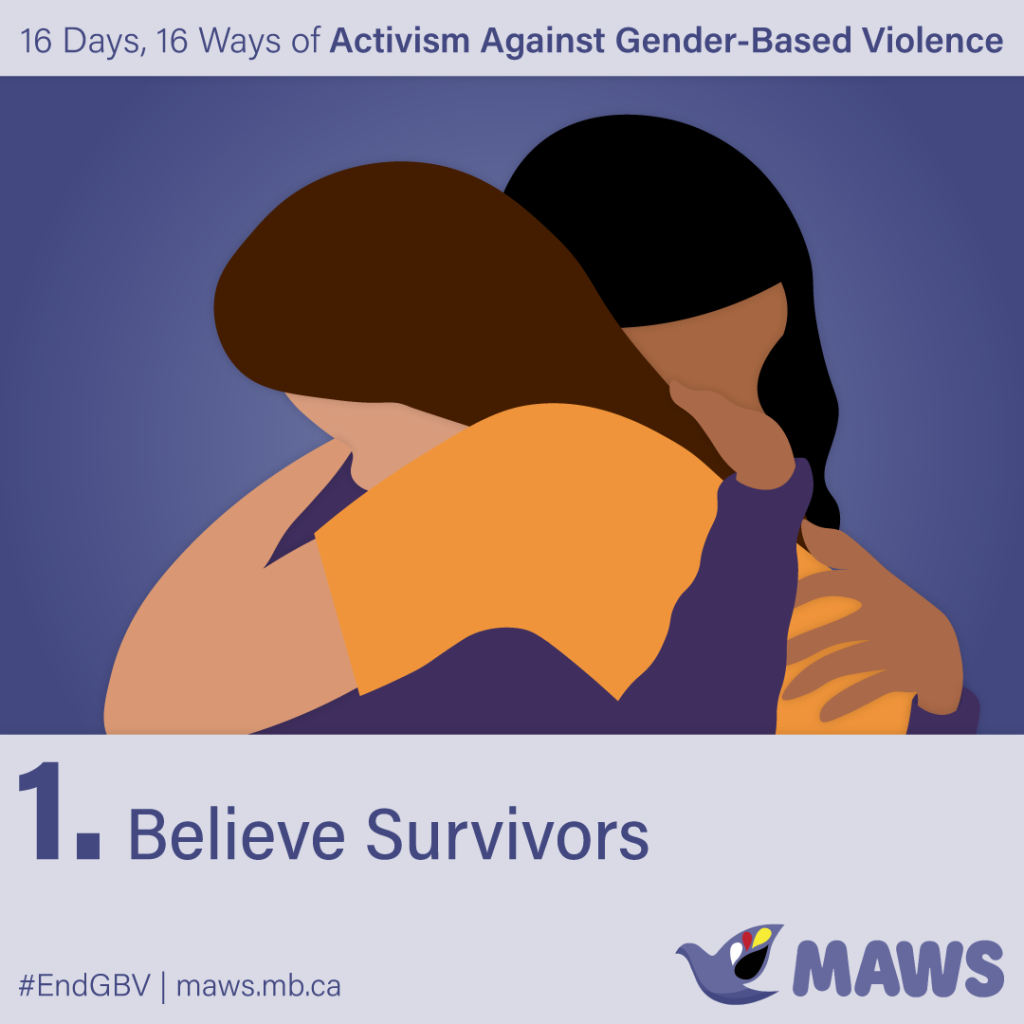
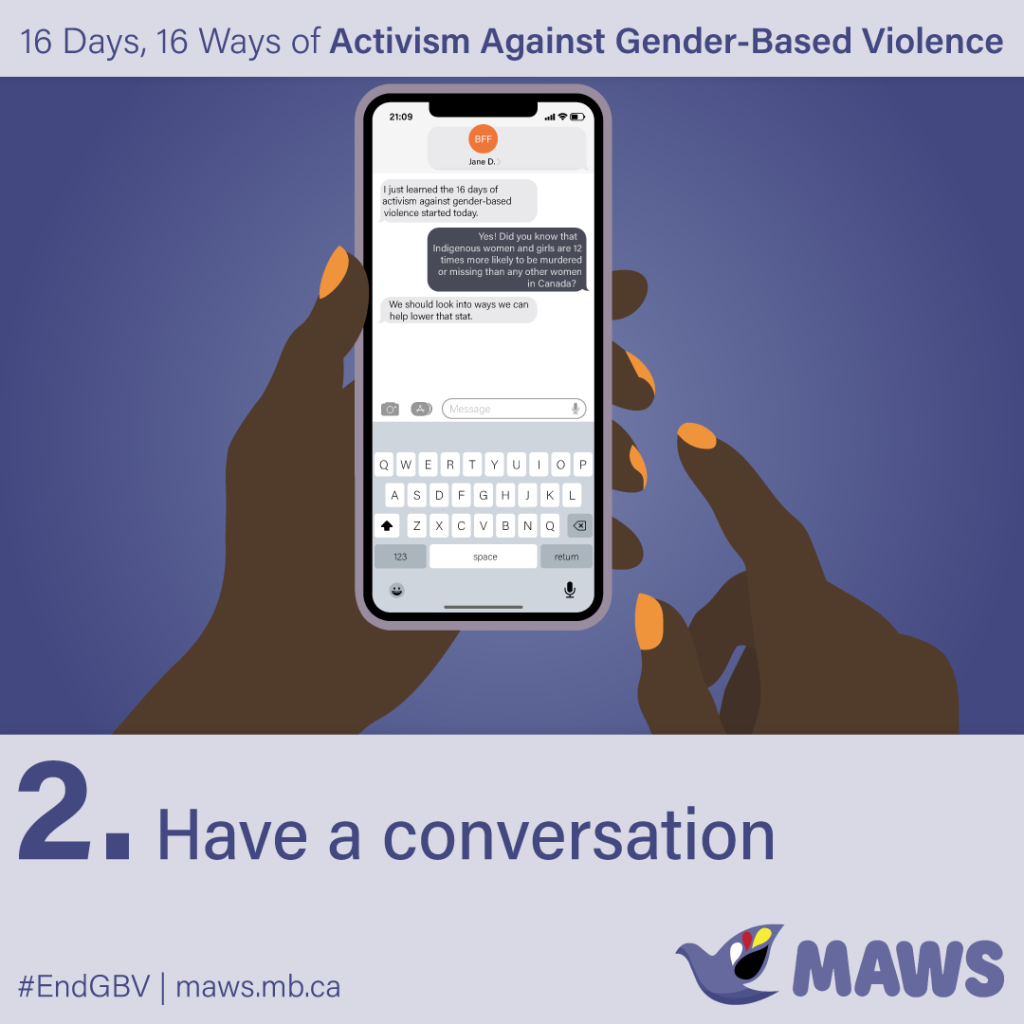
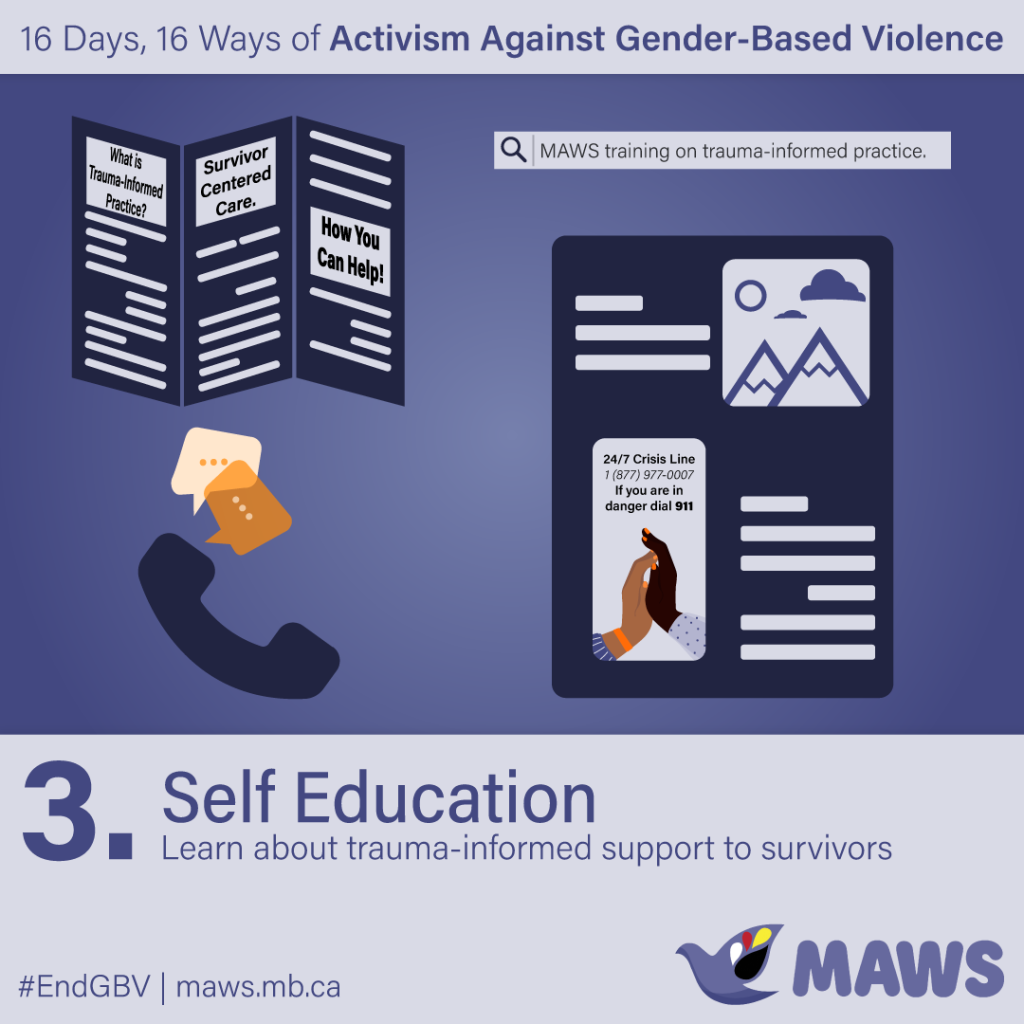
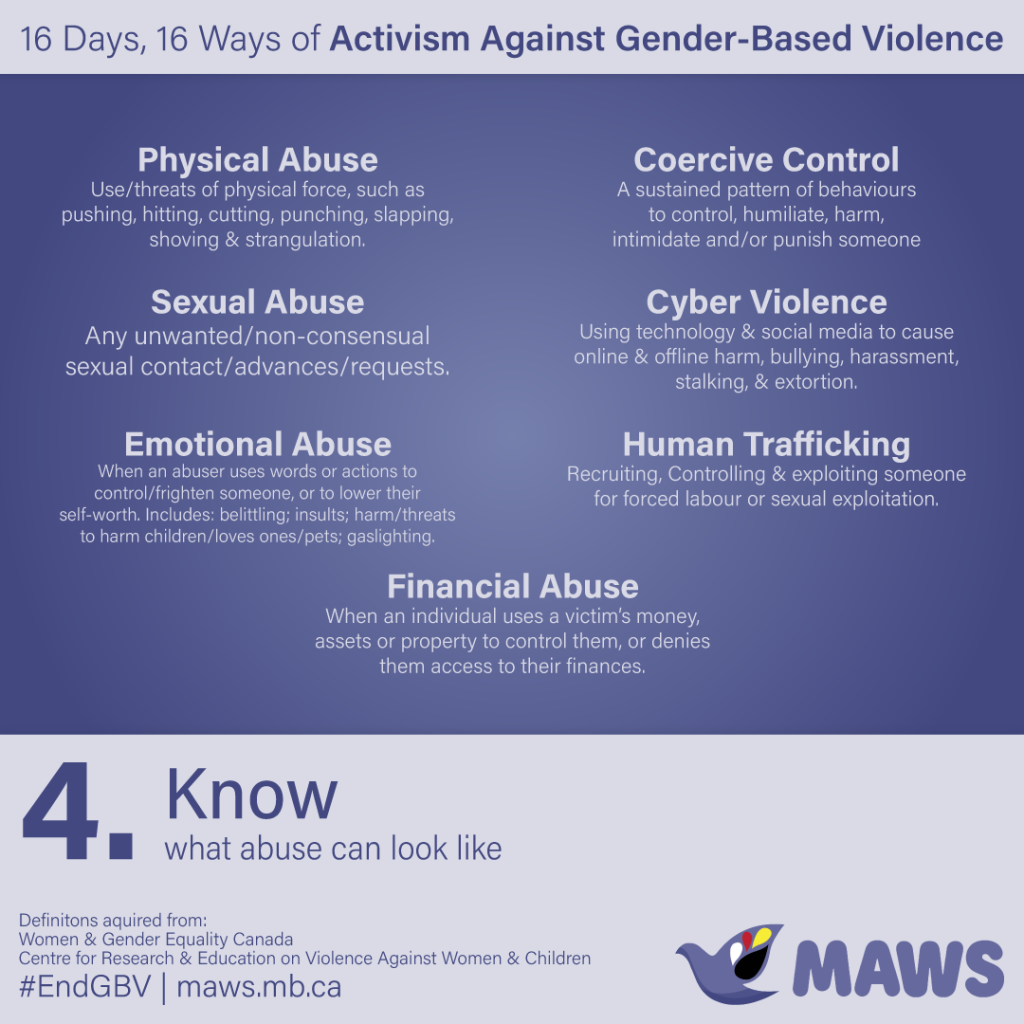
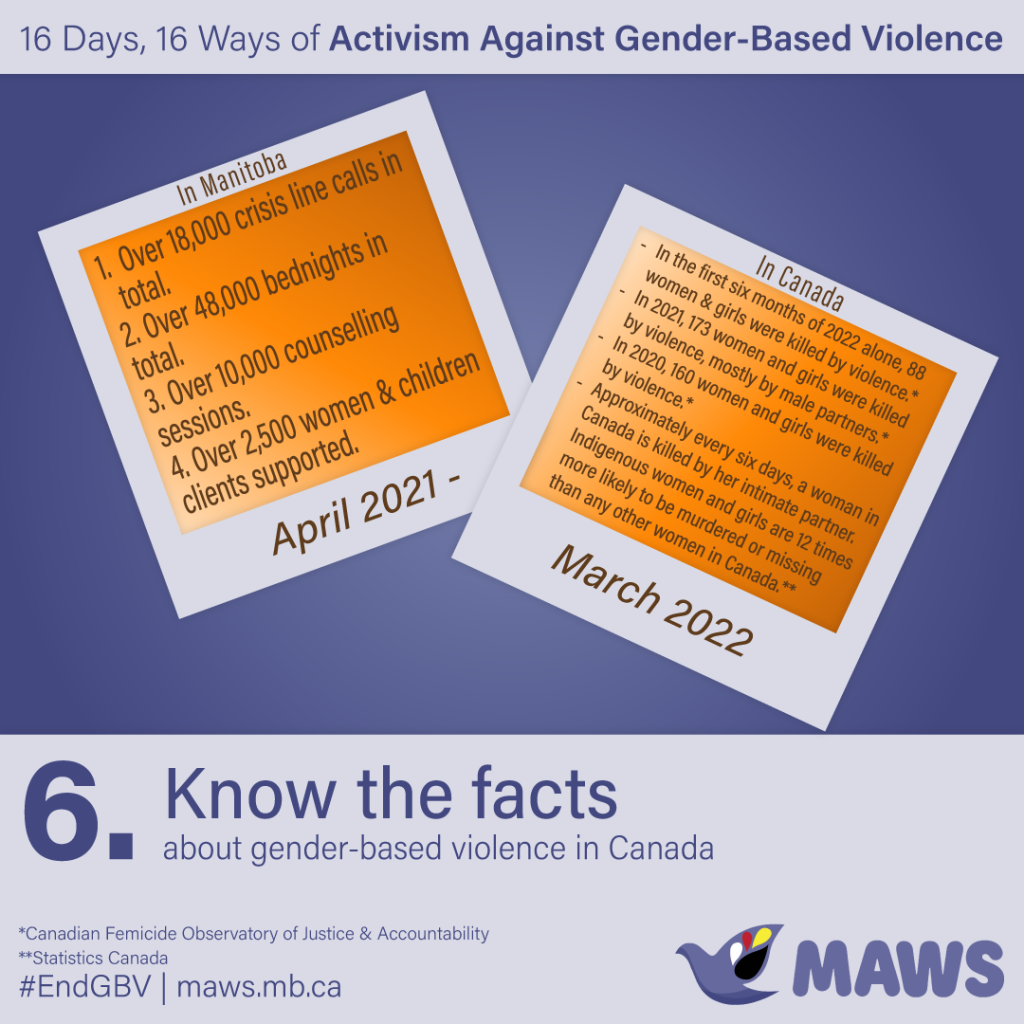
The 16 Days campaign is a global effort to increase public education about one of the most devastating human rights crises of our time and build communities of support for survivors of violence. GBV affects ALL of us. It exists in our homes, in our communities, in our workplaces – everywhere. Approximately every six days, a woman in Canada is killed by her intimate partner. (Statistics Canada). GBV costs lives.
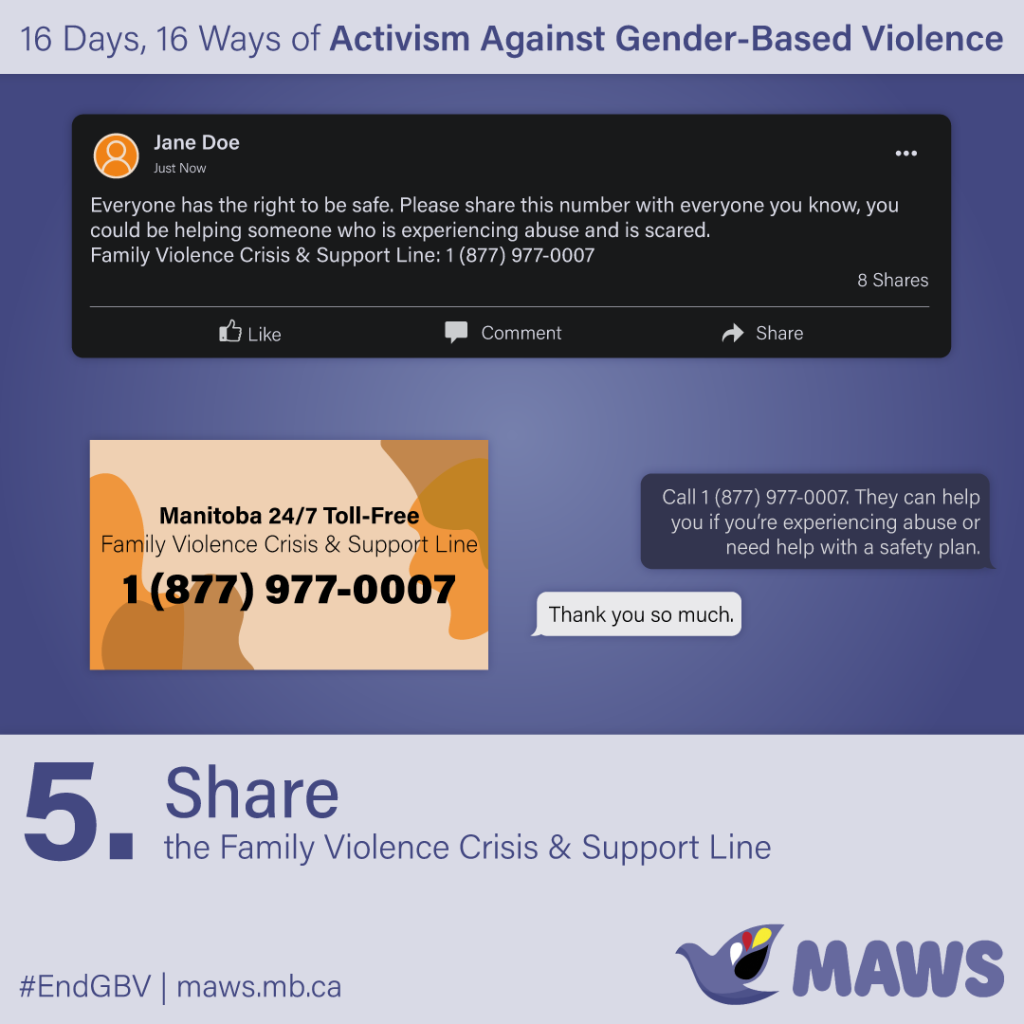
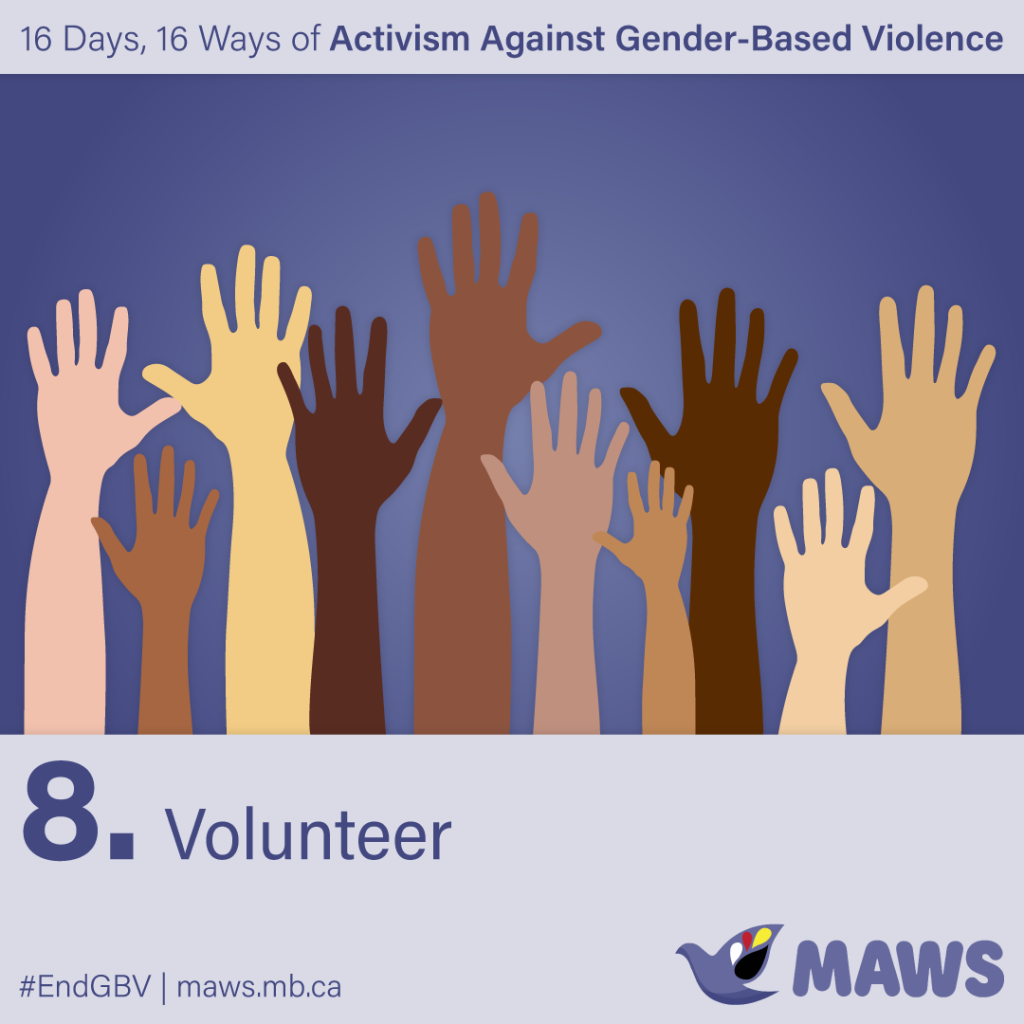
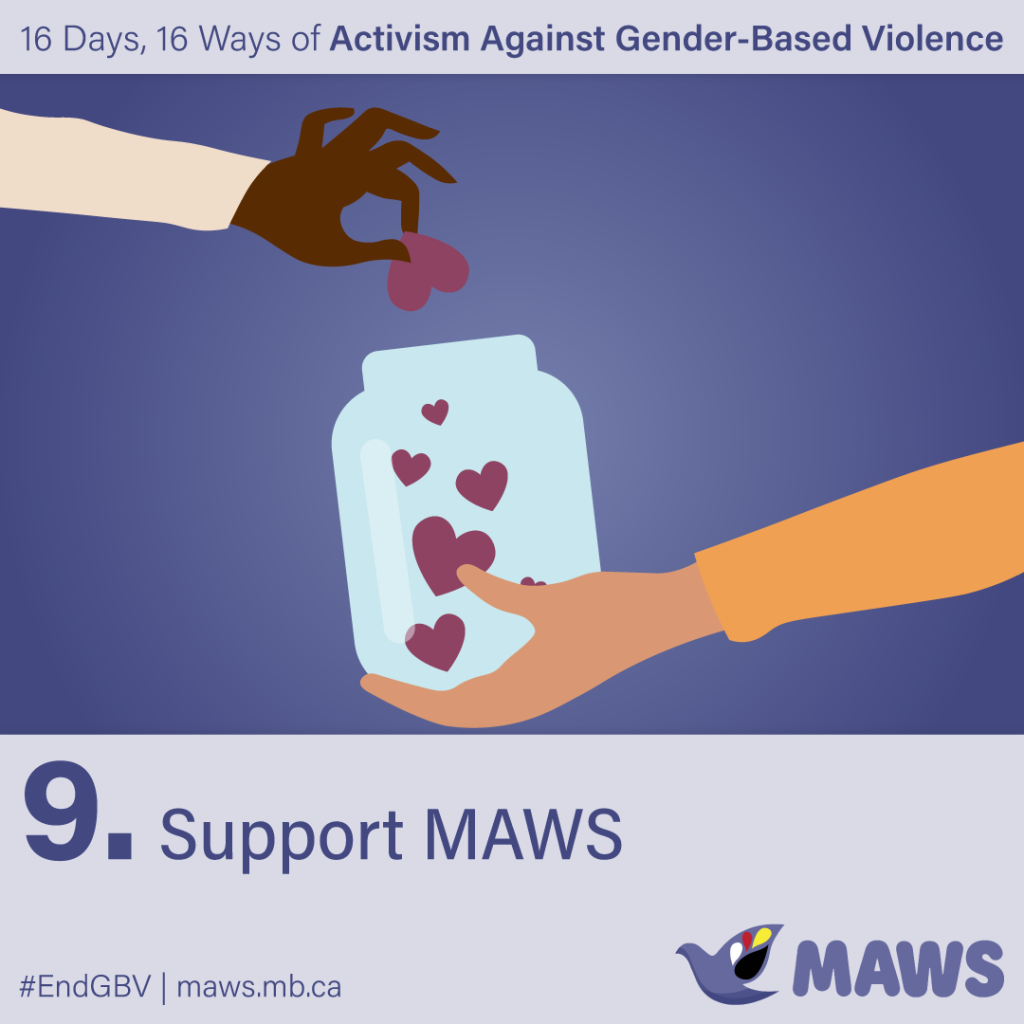
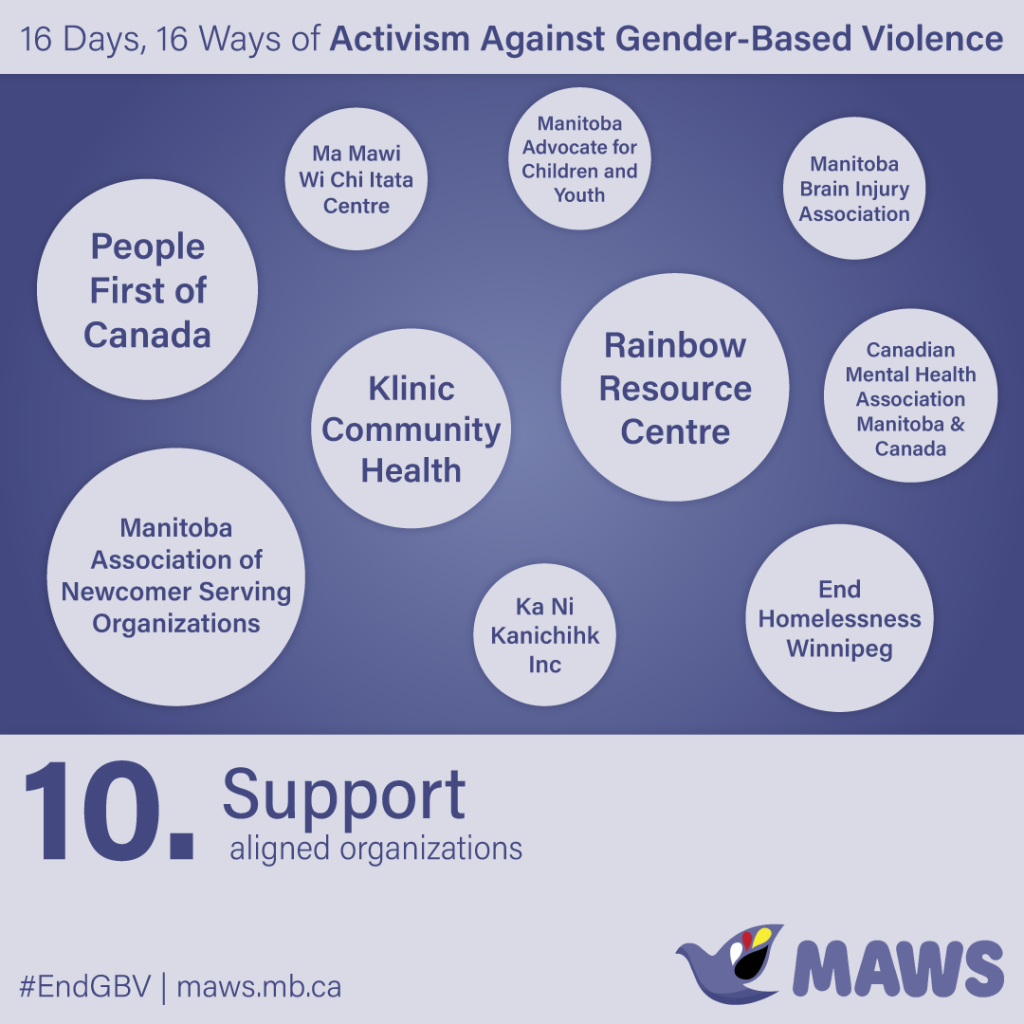
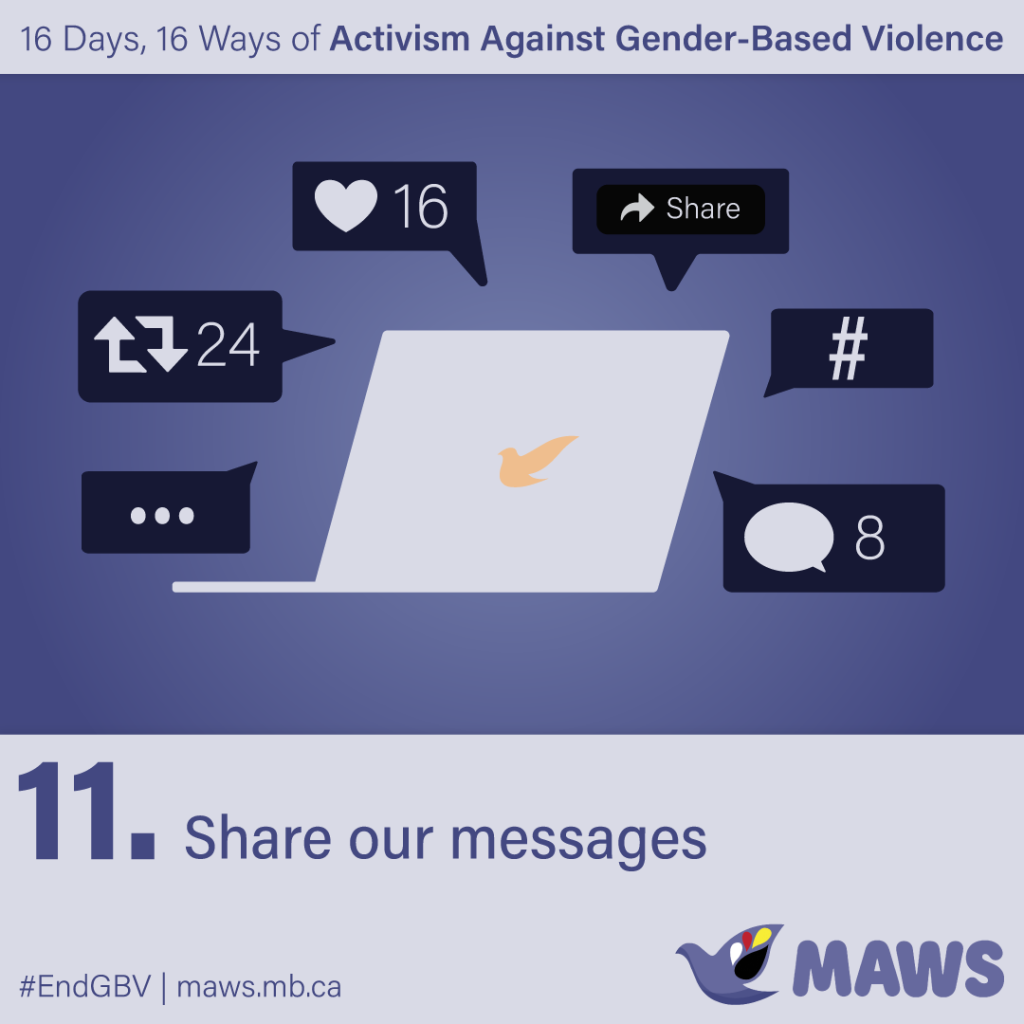
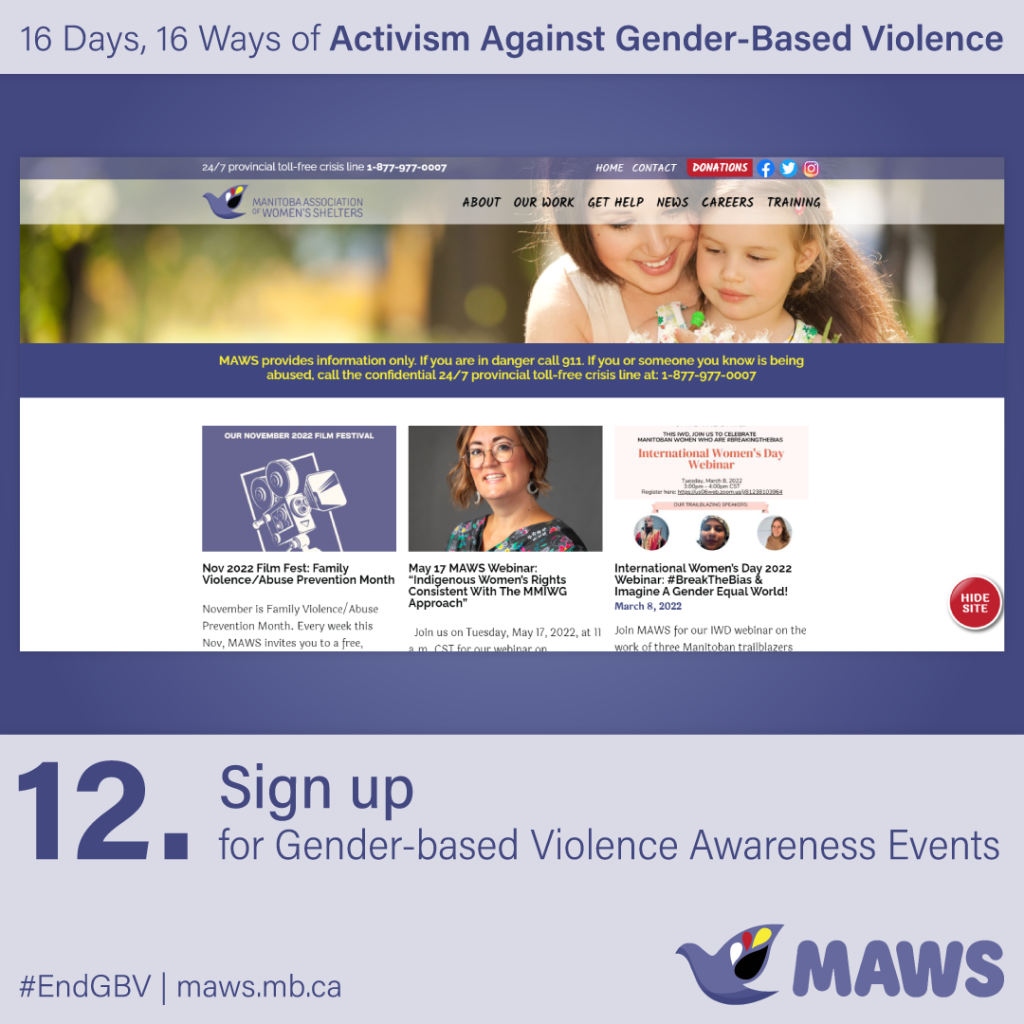
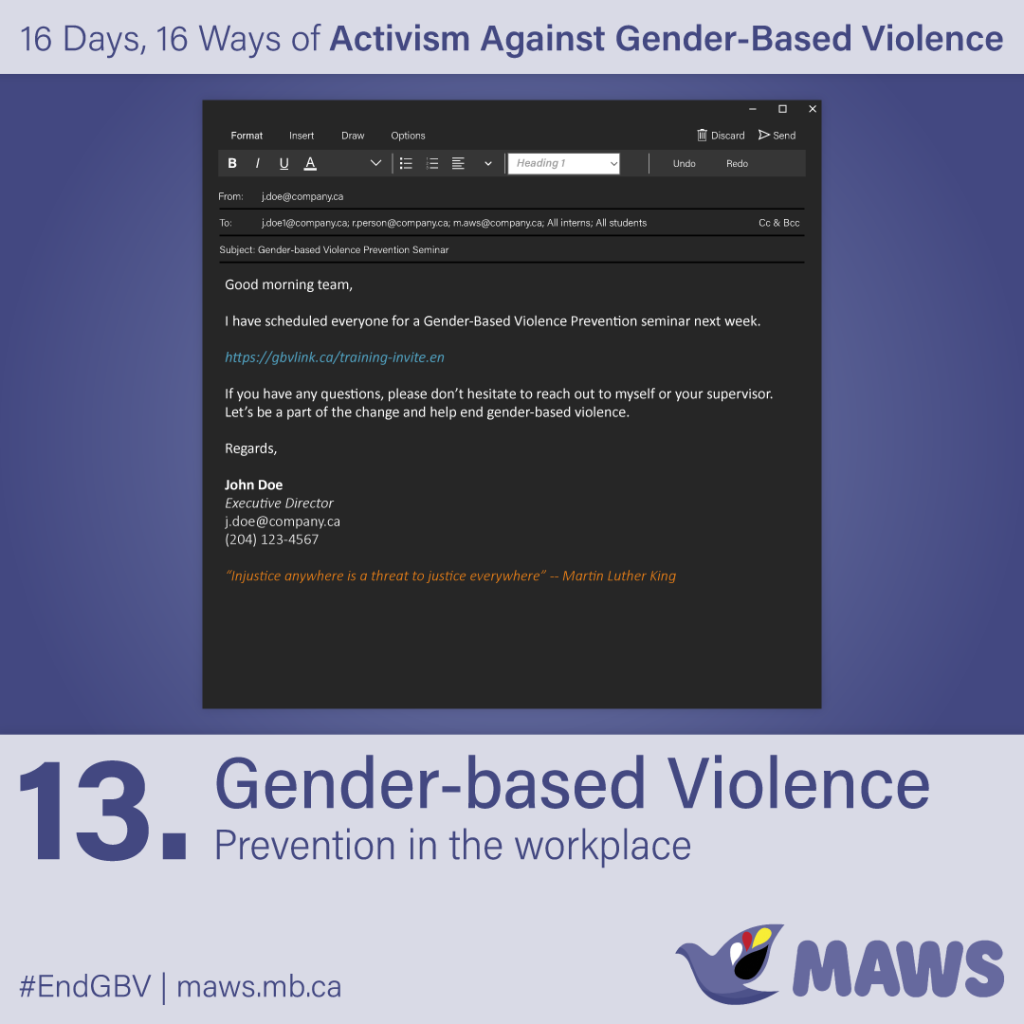
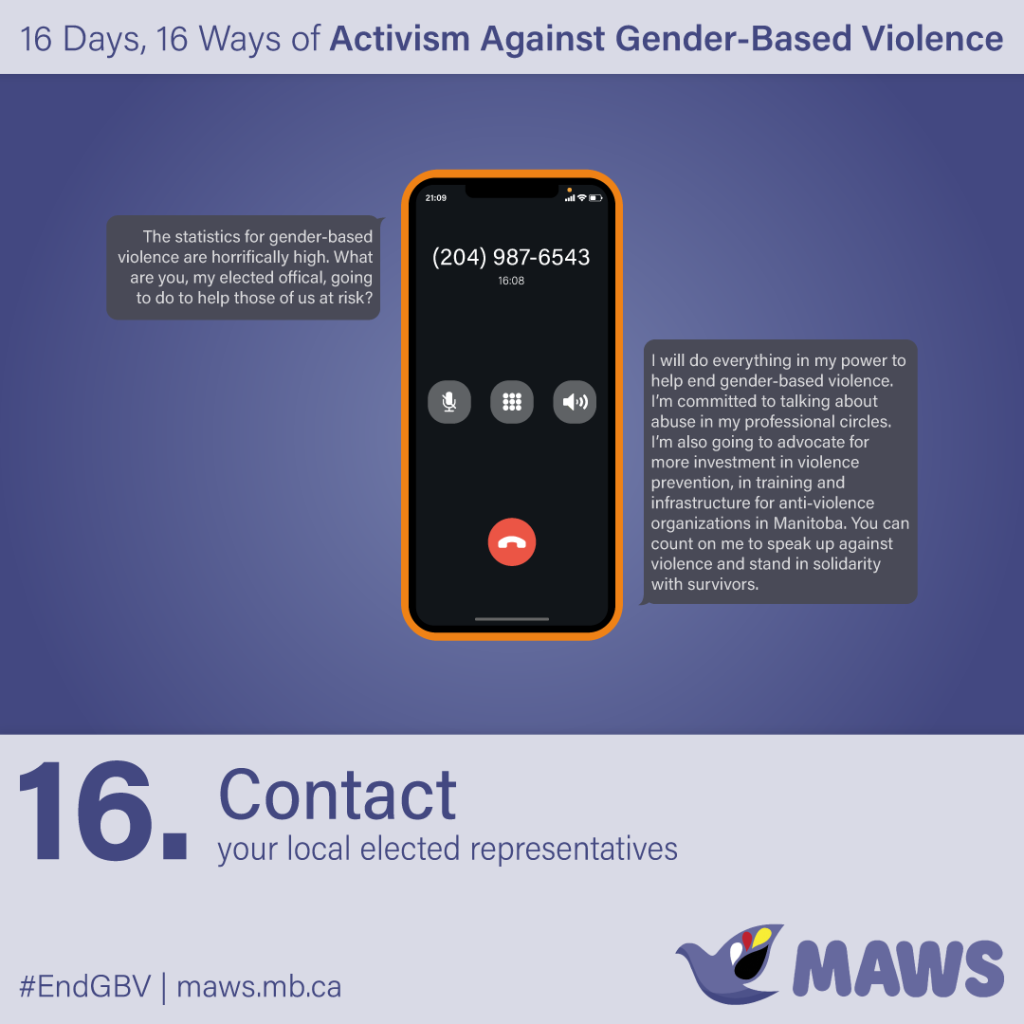
Here are the Actions for each of the 16 Days of Activism Against GBV:
“More Than” Campaign (2022)
In July 2022, the Manitoba Association of Women’s Shelters (MAWS) launched the national Women’s Shelters Canada (WSC)-led campaign “More Than” right here in Manitoba to raise awareness of gender-based violence. You may see our campaign on social media and in the Winnipeg Free Press, and we encourage all Manitobans to share the message: Violence is never okay. Everyone has the right to be safe. You are not alone.
These are just some of the many things that women do to keep themselves safe on their way back home: Not going out too late to hang out with friends or even just for a walk alone. Walking home/to the bus shelter or car park with other folks. Talking to someone on the phone while walking back home or in spaces where we feel isolated. Turning down our earphone volume or not using earphones at all in isolated public spaces. Holding out our car keys. Avoiding eye contact with strangers. Sadly, the reality is that for 2 in 5 women in Canada, even home isn’t safe. The United Nations has described gender-based violence (GBV) as a “shadow pandemic.” During the COVID-19 pandemic, GBV risks, rates and severity increased across Canada and the world.
We hope that the MAWS-WSC “More Than” campaign highlights that gender-based violence is more than just physical; it is pervasive and can affect anyone. Some groups that already experience barriers and discrimination, misogyny, homophobia, transphobia, racism, anti-Black racism and settler-colonial racist behaviours are more vulnerable to violence than others. Gender-based violence is an urgent public health and human rights crisis, and it’s on each of us to learn how to combat it in our homes, workplaces and communities.
“Day after Day” Campaign (2021)
MAWS was pleased to run the White Ribbon Canada “Day after Day” Awareness Campaign in Manitoba. The campaign sought to engage men and boys in conversations around healthy relationships, unlearning and rejecting toxic masculinity behaviours that lead to violence, and committing to change. MAWS will be sharing the “Day After Day” videos and graphics from White Ribbon, which follow the story of a family in lockdown experiencing a troubling pattern of domestic abuse.
During the pandemic, the world retreated into isolation and safety in their homes. But home is not the safest place for everyone. Between March and October 2020, calls to police about domestic disputes increased by 8.2 percent (Statistics Canada). For many, home is the space they share with their abuser, and the pandemic isolation meant that they were trapped there, with increasing risks and severity of violence, cut off from accessing support systems and resources. Gender-based violence is a violation of a person’s basic human right to be safe. It has devastating short- and long-term mental, physical and emotional effects on those affected by violence, including children who may witness violence or controlling behaviours.
Everyone has the right to explore their feelings and identities in healthy and open ways and to feel safe to be themselves. Society has socialized men and boys into believing that the only acceptable way to be a man is to be aggressive or in control, to not show “weakness”, to repress one’s feelings, or to express one’s emotions through anger instead of other healthy ways of open communication. Toxic masculinity pushes a template of controlling, rigid expressions and behaviours. Toxic masculinity is always dangerous and often fatal to women, girls, 2SLGBTQQIA folks & other groups facing discrimination in society, and it harms men and boys.
It’s more important than ever that men and boys are engaged in conversations around healthy relationships, in unlearning and rejecting toxic masculinity behaviours that lead to violence, and in committing to change.
We encourage men and boys to visit the White Ribbon website to learn more about promoting healthy masculinities, seeking guidance, and contributing to a future without gender-based violence.
“You Are Not Alone” Campaign (2021)
In November 2021, the Manitoba Association of Women’s Shelters (MAWS) launched a multi-lingual public awareness campaign to support immigrant, newcomer and refugee women and families experiencing gender-based violence (GBV). The campaign’s message was “You Are Not Alone,” and it features videos in five languages – Arabic, Punjabi, Mandarin, Persian, and English – along with information about the Manitoba 24/7 toll-free Crisis and Support Line and the MAWS website.
Women of cultural and linguistic diversity often face challenges like language or cultural barriers, lack of knowledge of support services, financial constraints, and uncertain immigration status, all of which can make them uniquely vulnerable to abuse. These, in addition to the general stigma in society around gender-based and family violence, can make newcomer and refugee women less likely to know that help is available, as well as where to seek it out.
Manitoba shelters are seeing more women and families from diverse cultural and linguistic backgrounds seeking support and refuge from violence. Through the multilingual videos and posters, the MAWS campaign aims to connect these survivors with support programs, including the confidential Crisis and Support Line (1-877-977-0007).
The Hon. Cathy Cox, Minister responsible for Status of Women, said, “All Manitobans deserve to live without fear for their safety. This multi-lingual public awareness campaign will serve to strengthen and promote the services that already exist for individuals and families impacted by domestic violence. Our government is committed to supporting newcomers or refugees who are experiencing trauma or abuse, including survivors of gender-based violence who otherwise often slip through the cracks and do not receive the services they need.”
Deena Brock, Provincial Coordinator of the Manitoba Association of Women’s Shelters, says, “The pandemic has increased the risks and severity of gender-based violence, particularly for those already facing barriers that would make them vulnerable to abuse. Newcomer and refugee women and families often experience a greater sense of isolation due to language barriers, fear of losing custody of their children due to uncertain immigration status, dependence on a family member who may be the primary sponsor for their immigration, and so on. We hope that these multilingual videos reach Mandarin, Punjabi, Persian and Arabic language speakers across Manitoba who may be experiencing violence and that they know that help is always available.”
MAWS would like to thank the BC Society of Transition Houses (BCSTH), which created the original “You Are Not Alone” Campaign for newcomer women and shared its resources with MAWS. Additionally, advertising for the MAWS campaign was made possible through collaboration with the Provincial Association of Transition Houses and Services of Saskatchewan (PATHS) and funds provided by the PrairieAction Foundation.
Click here to view the English-language version.
Arabic (30secs) – Arabic (60 secs)
English (30 secs) – English (60 secs)
Mandarin (30 secs) – Mandarin (60 secs)
Persian (30 secs) – Persian (60 secs)
Punjabi (30 secs) – Punjabi (60 secs)